Franz Waldvogel
The Master Butchers Singing ClubFranz Waldvogel, the eldest son of Fidelis Waldvogel and Eva Waldvogel, grows up between the discipline of the family butcher shop and the freedom of athletic and imaginative pursuits. Strong, courteous, and initially difficult to read, he becomes a town hero, falls deeply in love with Mazarine Shimek, and later joins the air corps as a pilot. His story binds together family duty, first love, the attraction of flight, and the gap between heroic ideas of war and the ordinary accidents that can end a life.
Identity and Background
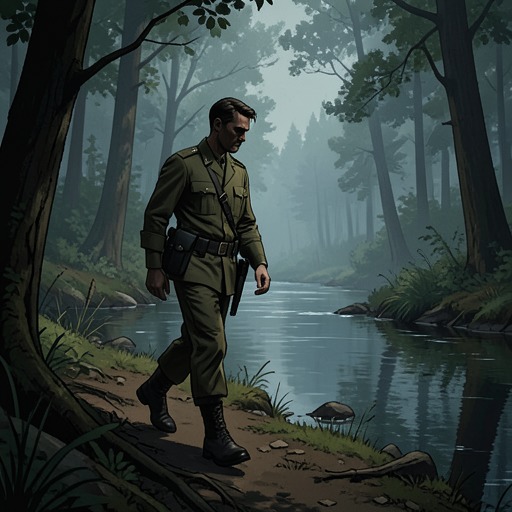
Franz arrives in Argus as a small boy with his mother, Eva, after Fidelis has worked hard enough to bring his family across the ocean. At their reunion, he walks proudly from the train carrying Eva’s purse. The moment places him within a household built by migration and labor: Fidelis has made a livelihood through butchering, and Eva is determined to make a life in a landscape that initially seems barren to her.
As a teenager, Franz is fifteen, exceptionally strong and athletic, and marked by an easygoing American manner. He smiles, greets people politely, and speaks with only a faint German accent. Delphine Watzka sees him as both open and opaque: his feelings may be hidden or simply hard to discern. His athleticism has the force of a family inheritance, combining Fidelis’s patience and controlled anger with Eva’s tenacity. Franz plays football, basketball, and baseball with such grace that he becomes a local hero.
The butcher shop is not merely the family business but one of the places where Franz learns responsibility. On slaughtering days, he works alongside his brothers; when his father needs help driving a prize sow toward the killing chute, Franz takes a stick and helps. The incident also reveals that work in the shop is dangerous and demanding, and that the children are being trained in Fidelis’s profession from an early age.
Family Life and Responsibility
Franz’s reserve does not mean indifference to his family. In the household’s morning routine, Fidelis can wake Franz with a wordless shake, while the younger twins require more careful attention. Franz is already alert to his brothers’ mischief: after finding Emil’s missing boot, he appears ready to strike his little brother but restrains himself, brooding over his grooming instead. The small scene shows both his impatience and his sense of the dignity expected of an older boy.
After Eva’s death, the family’s ordinary religious and domestic structures are unsettled. The boys no longer attend church, and they begin to see themselves as forsaken by a God who could take their mother despite their prayers. Franz brings Mazarine home on his bicycle during this period of grief. He is not simply introducing a romantic interest into the house: Delphine recognizes how profoundly he loved Eva and fears that his attachment to his first love may be correspondingly deep and vulnerable.
Fidelis’s relationship with Franz is marked by restraint and by competing ideas of the future. When Franz announces that he intends to enlist in the air corps, Fidelis protests that there is no war and leaves the room distressed. Franz, by contrast, is convinced that war is coming. His decision makes a private ambition into a family conflict: he is choosing a dangerous future that his father hopes will not arrive.
Mazarine and First Love
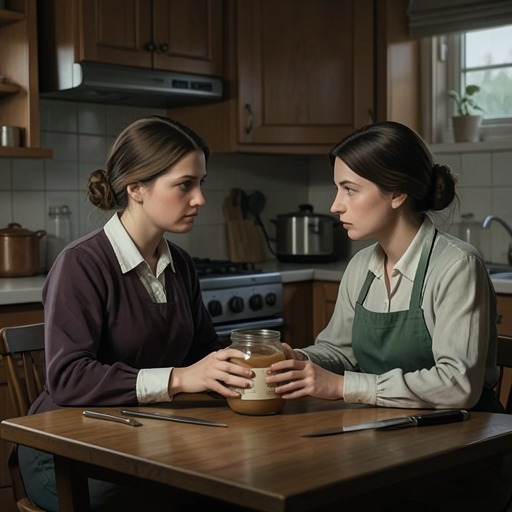
Franz and Mazarine’s connection begins in school and takes shape in the private place they share beneath a pine tree. Mazarine is poor, owns only one dress, and arrives at the Waldvogel shop in boys’ shoes; Delphine tests her by giving her shop tasks, and Mazarine performs them carefully and asks for more. Delphine recognizes her affection for Franz and understands that his feelings are not likely to be casual.
The relationship is not free of jealousy or uncertainty. As Franz gains attention for his football, Betty Zumbrugge offers him rides and pursues him. Mazarine is troubled but too proud to tell him; Franz does not understand that Betty’s advances matter to her. When he agrees to a Christmas-holiday date with Betty, she waits in her father’s car rather than coming into the shop. The encounter ends in a painful recognition for Franz: he cannot make the intimacy with Betty feel like what he shares with Mazarine, and he leaves the car to walk.
The separation that follows becomes a physical and emotional crisis for Franz. Passing the place where he and Mazarine used to enter their pine-tree refuge makes his throat tighten and his breathing difficult. He loses weight, sleeps badly, and dreams of water carrying Mazarine beyond his reach. He longs not only for physical closeness but for the familiar ordinary intimacy of giving her bicycle rides, steering while she balances in his arms. Mazarine keeps her distance, and he is forced to face the fact that his love cannot by itself restore their relationship.
Flight and the Experience of War
Airplanes offer Franz a way to redirect his attention. He works at the airfield when Fidelis lets him away from the shop, and Pouty Mannheim teaches him to fly. After eight flights, Pouty gives him a turn at the controls; their practice expands from takeoffs and landings to stalls, spins, wingovers, and loops. On his first solo flight, Franz performs difficult maneuvers and lands feeling at peace. Flight gives him a sense of balance and release that he cannot find on the ground, and he begins to imagine that he might endure the loss of Mazarine if he could spend his life in the air.
Franz’s enlistment fulfills his prediction that war will come, but combat is not the clean heroic contest he once imagined. Assigned to the 439th Troop Carrier Group, he writes to Mazarine about its insignia: an angry beaver with wings and a missile. In the same letter, he looks back on their school-age love and describes flying as a calm vantage above a world that otherwise feels tortured. He also acknowledges that he has changed and that his heart has reached a kind of surrender.
When he and Mazarine meet again beside the river, she recognizes that they are both changed, though in different ways. Franz struggles physically to contain his distress and an urge to flee. Mazarine sees the need for escape and kisses him; the gesture helps him begin speaking. He tells her that he was shot down once and later lost an engine, then recounts seeing fellow airmen die: Schumacher was carried onto a reef after parachuting out, while Tom Simms’s damaged parachute failed to open properly. Mazarine holds Franz’s hand inside her coat to warm it and answers that she hopes the deaths felt like a dream. The reunion gives him a listener, but it does not erase what he has seen.
Death and Narrative Significance
Franz once pictured a spectacular, reciprocal death in aerial combat: he would bring down his favorite enemy aircraft and fall with its pilot in a final blaze. The war he actually experiences includes boredom, terror, and the daily effort to survive. His own death comes not in battle but through a mistake on the ground.
While Franz walks into a supply locker, a plane takes off behind him with a heavy steel cable still attached. The ground crew members duck as it streams out. A small difference in Franz’s timing might have put him beyond its reach, but the cable catches the side of his head. The account emphasizes the disproportion between his childhood fantasy of a dramatic combat death and the mundane accident that kills him: no enemy pilot, final salute, or chosen sacrifice, only a forgotten cable and an unlucky moment.
Mazarine later travels to the hospital with her baby, accompanied across the country by Delphine. Delphine takes the child and stays in the hall so Mazarine can enter Franz’s ward first. The scene places his death within the life he and Mazarine had hoped to build together, and returns the story to the care and family bonds that had surrounded him from childhood. Franz’s trajectory is therefore not a triumphal passage from boyhood to war: flight gives him exhilaration and a language for survival, while love offers a fragile route back to speech, and the ordinary mechanics of war finally cut that future short.